الشبكات العصبية واللغة البشرية: أوجه التشابه والاختلاف
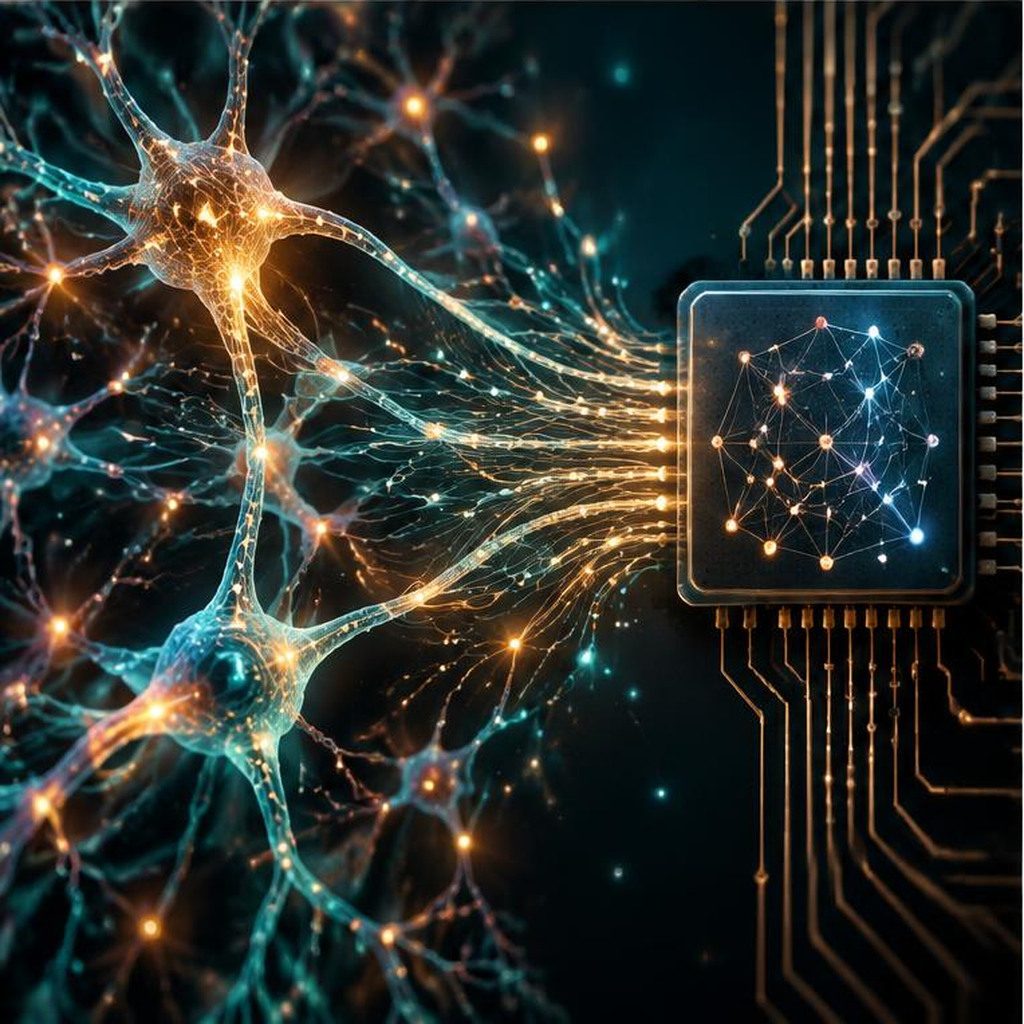
عند الحديث عن الشبكات العصبية الاصطناعية واللغة البشرية، نجد أنفسنا أمام مقارنة مثيرة بين نظامين يعالجان المعلومات بطرق تبدو متشابهة ظاهريًا لكنها تختلف جوهريًا في التصميم والوظيفة. الشبكات العصبية الاصطناعية مستوحاة في الأصل من بنية الدماغ، لكن مسار تطورها أخذها بعيدًا عن النموذج البيولوجي في كثير من الجوانب.
اللغة البشرية تعتمد على شبكة معقدة من المناطق القشرية وتحت القشرية. لا توجد 'وحدة لغة' واحدة، بل نظام موزع يضم مناطق للتحليل الصوتي، والمعجم، والقواعد، والدلالة، والإنتاج الحركي للكلام. هذه المناطق مترابطة بمسارات عصبية تسمح بتدفق المعلومات في اتجاهات متعددة، مع قدر كبير من التوازي والتفاعل.
في المقابل، تعتمد نماذج اللغة الحديثة بشكل أساسي على بنية المحول (Transformer)، التي تستخدم آليات الانتباه الذاتي للسماح لكل عنصر في التسلسل بأن يتفاعل مع كل العناصر الأخرى. هذه البنية فعالة للغاية في التقاط العلاقات بعيدة المدى في النص، وقد حققت نجاحات مذهلة في الترجمة والتلخيص والحوار. لكنها تظل في جوهرها معالجة تسلسلات من الرموز الإحصائية.
أحد أوجه التشابه البارزة هو التمثيل الموزع. في الدماغ، يعتقد أن المعاني ترمز عبر أنماط نشاط موزعة عبر مجموعات من الخلايا العصبية، وليس عبر خلايا مفردة مخصصة لكل مفهوم. وبالمثل، تستخدم الشبكات العصبية الاصطناعية متجهات عالية الأبعاد لتمثيل الكلمات والمعاني، حيث تتشابه المفاهيم المتقاربة دلاليًا في فضاء التمثيل.
ومع ذلك، يظهر الاختلاف في القدرة على التعلم من البيانات القليلة. الطفل البشري يكتسب لغة كاملة تقريبًا من خلال التعرض لكمية محدودة نسبيًا من المدخلات اللغوية، مع الاستفادة من التفاعل الاجتماعي والسياق الجسدي. أما النماذج الاصطناعية فتحتاج إلى كميات هائلة من النصوص للتدريب، وغالبًا ما تفشل في التعميم خارج نطاق البيانات التي رأتها.
كما أن الدماغ يتميز بالقدرة على التعلم المستمر مدى الحياة دون أن ينسى بشكل كارثي ما تعلمه سابقًا، وهي مشكلة معروفة في الشبكات العصبية تسمى 'النسيان الكارثي'. الباحثون يعملون على تقنيات مثل التعلم المرن وتوسيع البنية لمحاكاة هذه القدرة، لكن النتائج لا تزال بعيدة عن كفاءة الدماغ.
جانب آخر مهم هو التجسيد. اللغة البشرية متجذرة في التجربة الجسدية والحسية. نفهم كلمات مثل 'ثقيل' أو 'ناعم' جزئيًا من خلال تجاربنا الحسية والحركية. النماذج اللغوية الحالية تفتقر إلى هذا التجسيد، رغم محاولات دمجها مع نماذج الرؤية والروبوتات.
من خلال دراسة هذه التشابهات والاختلافات، نكتسب فهمًا أعمق لكلا النظامين. الشبكات العصبية توفر لنا أدوات قوية لمعالجة اللغة على نطاق واسع، بينما يظل الدماغ البشري نموذجًا لا يضاهى في الكفاءة والمرونة والقدرة على المعنى الحقيقي. المستقبل يكمن في بناء جسور أذكى بين الاثنين.
Neural Networks and Human Language: Similarities and Differences
When discussing artificial neural networks and human language, we confront an intriguing comparison between two systems that process information in ways that appear similar on the surface yet differ fundamentally in design and function. Artificial neural networks were originally inspired by the structure of the brain, but their evolutionary path has taken them far from the biological model in many respects.
Human language depends on a complex network of cortical and subcortical regions. There is no single ‘language module’; rather, a distributed system comprises areas for phonological analysis, the lexicon, grammar, semantics, and the motor production of speech. These regions are interconnected by neural pathways that allow information to flow in multiple directions, with a high degree of parallelism and interaction.
In contrast, modern language models rely primarily on the Transformer architecture, which uses self-attention mechanisms to allow every element in a sequence to interact with every other element. This architecture is highly effective at capturing long-range dependencies in text and has achieved remarkable successes in translation, summarization, and dialogue. At its core, however, it remains the statistical processing of sequences of symbols.
One prominent similarity is distributed representation. In the brain, meanings are believed to be encoded through patterns of activity distributed across populations of neurons, rather than through single cells dedicated to each concept. Similarly, artificial neural networks use high-dimensional vectors to represent words and meanings, with semantically related concepts lying close together in representation space.
The difference appears, however, in the ability to learn from sparse data. A human child acquires a nearly complete language through exposure to a relatively limited amount of linguistic input, benefiting from social interaction and physical context. Artificial models require enormous quantities of text for training and often fail to generalize beyond the data they have seen.
The brain is also distinguished by its capacity for lifelong continuous learning without catastrophically forgetting what it learned earlier—a well-known problem in neural networks called ‘catastrophic forgetting.’ Researchers are working on techniques such as elastic weight consolidation and architectural expansion to mimic this capacity, but results still fall short of the brain’s efficiency.
Another important aspect is embodiment. Human language is rooted in bodily and sensory experience. We understand words such as ‘heavy’ or ‘soft’ partly through our sensory and motor experiences. Current language models lack this embodiment, despite attempts to integrate them with vision models and robotics.
By studying these similarities and differences, we gain a deeper understanding of both systems. Neural networks provide us with powerful tools for processing language at scale, while the human brain remains an unmatched model of efficiency, flexibility, and genuine meaning. The future lies in building smarter bridges between the two.